
This is what bid-no-bid mistakes really cost you


This is what bid-no-bid mistakes you really cost you
We all know the frustration of a tender you were convinced you were going to win, only for a competitor to walk away with the contract. Weeks of work, a proposal you’re proud of and, just when you were hoping to get started, the whole thing falls through. Frustrating, to say the least. Losing is part of the job, of course, but some rejections sting more than others. Especially when it turns out the warning signs were there from the very beginning.
A major risk, an exclusion ground or simply a weaker fit than you initially thought. With the right information at the right time, you might have made a very different bid/no-bid decision — and saved yourself a lot of time, work and headaches in the process. In this article, we look at what bid/no-bid mistakes really cost and how you can decide which tenders are worth pursuing before the real work even begins.
One wrong ‘go’ keeps your entire organisation busy
The moment you decide to bid for a tender, you create work for far more than just your tender manager. The documents need to be reviewed, requirements identified, legal needs to assess the contractual terms, finance has to check the commercial viability... And the proposal itself still needs to be written, refined and reviewed. Every ‘go’ therefore reserves a significant chunk of your wider team’s time. To put that into perspective, let’s run through a simple example based on a 100-page tender dossier.
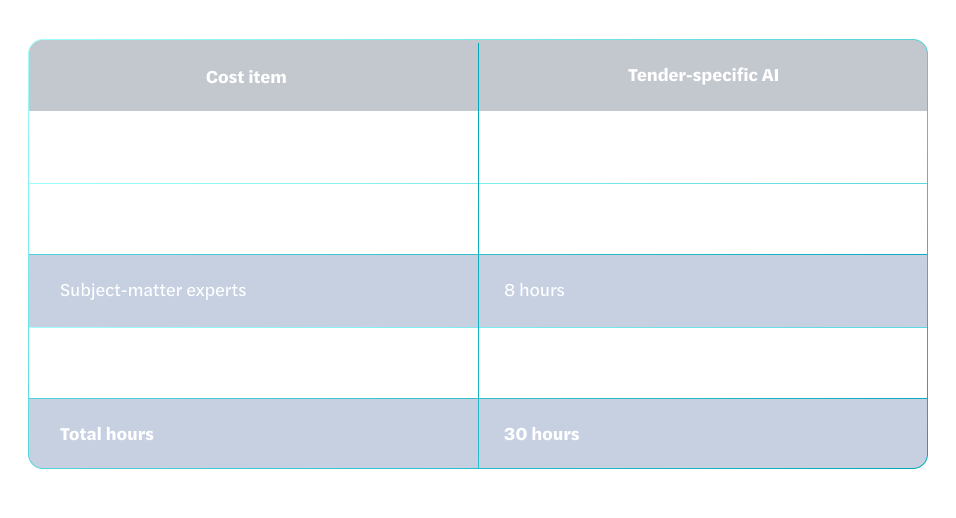
Say your tender manager spends 16 hours on the tender, legal and finance contribute another 4 hours between them, and subject-matter experts spend a further 8 hours providing input. Is the same opportunity also assessed twice? Or do you need to investigate again why a similar opportunity previously received a go or no-go? You can easily add another 2 hours. If it later turns out that this tender should never have received a ‘go’ in the first place, you’ve already spent around 30 hours unnecessarily.
And that’s before you count the hours you missed out on
If you’re already thinking, ‘that’s a lot of hours’, there’s more. These are only the hours you can count and see on a timesheet. The biggest cost is the time your team can no longer spend on a stronger tender. While your team pours more than 30 hours into an opportunity with a relatively low chance of success, those same hours can’t be spent on one where you’re much better positioned to win.
Your tender manager could have used that time to sharpen the win strategy for another tender. Subject-matter experts could have gathered stronger evidence. There may even have been room for an additional review round. None of that guarantees a win, of course, but it does show why a poor ‘go’ costs far more than the hours that eventually appear on your timesheet.
Make faster bid/no-bid decisions
With Brainial, you can identify potential dealbreakers before you make the bid/no-bid decision. Tender Alerts automatically collects relevant tenders based on your own search profiles, while Brainial extracts key criteria, exclusion grounds, risks and planning details directly from the tender documents. This helps you quickly see whether you meet the most important requirements, where potential risks lie and which deadlines or conditions require extra attention.
Your team no longer needs to work through dozens of documents just to decide whether an opportunity is worth pursuing. Everyone starts with the same information, helping you reach a well-founded bid/no-bid decision faster. Want to see how Brainial can help? We’d be happy to show you in a demo.


